


In February 20, US Time, coinciding with the Chinese Lunar New Year of Bingwu, IntelliMicro held a project progress meeting in the United States. The meeting was chaired by Xiang Zhenfei, co-founder and chairman of IntelliMicro. Academician Yu-chong Tai (Founder of the Department of Medical Engineering of Caltech, Co-founders of IntelliMicro), Academician Mark Humayun (Professor at the University of Southern California, the father of “the intelligent retina”), and experts in the US attended the meeting. During the Spring Festival, the Company’s scientific team continued their efforts to conduct strategic planning and further deepen international cooperation.
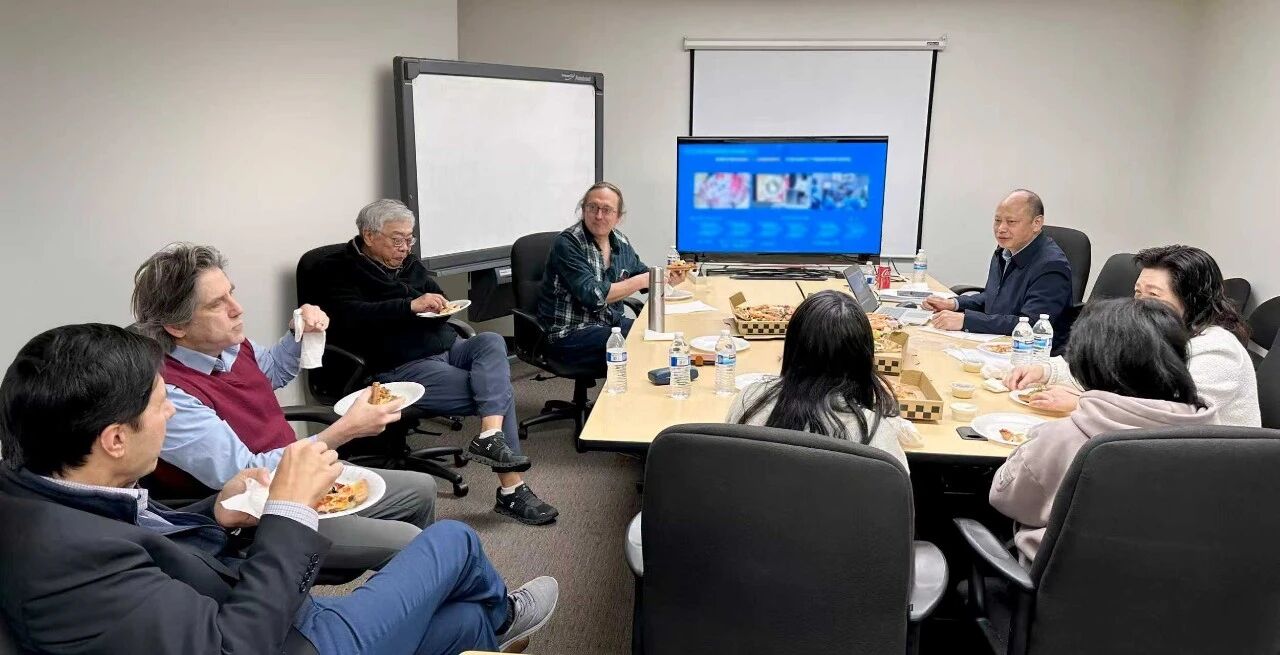
The meeting aimed to summarize the Company’s recent operations and project progress, clarify strategic direction, and ensure the timely completion of various plans. The meeting first reviewed the Company’s operations and project progress in recent years, pointing out that despite facing many challenges, the Company has maintained a steady development trend and achieved phased results in the field of invasive BCI. At the same time, the participants analyzed the current competitive landscape and future trends of the medical device market, providing important reference for the Company’s next strategic planning.
The meeting emphasized that the series of invasive BCI projects are aimed at precision medicine and functional restoration, but the industry has high entry barriers and significant research and development challenges, the scientific nature must be respected. The “IMIE Intelligent Retina” project, which aims to restore sight to the blind, is a prime example of this field. Initiated in 1998 by a team of scientists from IntelliMicro, it has been 28 years in the making. The team’s unwavering pursuit of technological breakthroughs from “0 to 1” has propelled this cutting-edge project ever forward, bringing it ever closer to its goal of benefiting the blind worldwide. The project has recently received the official ethical approval and is about to enter the clinical trial phase. There is a discussion on how the blind worldwide can quickly benefit from the BCI technology “IMIE Intelligent Retina” and regain sight as soon as possible.
The meeting also discussed in depth the implementation status of each project, the challenges encountered, and the next steps in the work plan. The meeting concluded that achieving precision medicine in the cutting-edge field of invasive BCI requires a marathon-like long-term commitment, guided by scientific principles, and continuous exploration into uncharted technological frontiers. The meeting clarified the goals and timelines for each project, requiring all staff to strictly adhere to the plan, strengthen teamwork, and jointly solve problems.